
-
-
The Ghost of Christmas Past
Memories of a dad at Christmas are like Polaroid snapshots of growing up in mid-century suburbia Gary Gately There he is, hunched over the wires of the train garden in our living room, sparks flying while he hooks up the transformer so we can make the trains go fast and...
-

January-February 2026 Liguorian Sample Digital Edition
Sample the January-February 2026 Liguorian Digital Edition
-

A New Era
When I returned to Liguori Publications after an absence of twenty-three years, a simple, handwritten sign was taped to my new office door: “Welcome back, Father Tom.” Welcome back, indeed. It has been a blessed journey, one I could never have imagined or predicted. When I concluded my first assignment...
-
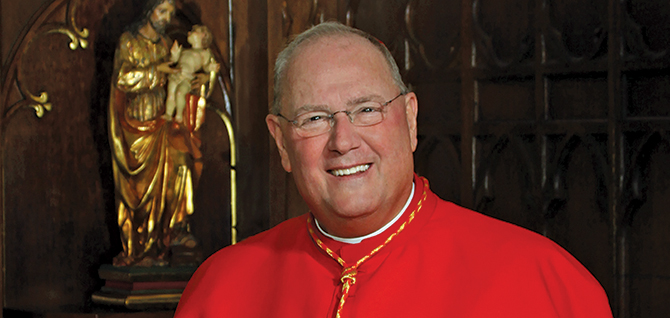
Catching Up with Timothy Cardinal Dolan
Timothy Cardinal Dolan, archbishop of New York, is one of the most recognizable leaders of the Catholic Church in the United States. Known for his easygoing manner, welcoming strangers as if they were lifelong friends, and his exceptional memory for people’s names and the details of their lives, he is less intimidating than a person in his position might be.
-

Staying Home for Good
It’s treacherous to live in Honduras, migrating can be deadly, so care is vital for all who remain in this Central American country I had spent time in Honduras as part of my Jesuit formation, and I loved the people, but…live with them? Of course, I started looking for loopholes!...


Lectio Divinia
The Meditative way of reading the Bible opens us to converse with and become friends with God It was likely Lent or Advent, and a Franciscan priest named Fr. Philip Blaine was sitting across from a group of ten of us, the fluorescent light waxing a glow on him as...
At the End of the Day…
“Where did you see God today?” my daughter asked her squirmy offspring as we gathered by their family’s prayer table to pray together before bed. “I want to go first! I want to go first!” the two older girls argued in excited voices. “NO, myself!” demanded the two-year-old. I sat...
The Do-si-do Girl
My mom once told me that there are people born into this world who don’t know how to love but are the ones who probably need it the most. And that if you love them long enough and hard enough without expecting anything in return, someday that love will bubble...
January-February 2024 This and That
A Faith Filled Collection of Wonder, Wisdom, and Whimsy Ash Wednesday is February 14, 2024. Did You Know? In the Middle Ages, ashes were sprinkled on the head rather than drawn in a cross on the forehead. “I know God won’t give me anything I can’t handle. I just wish...
Lonely? She Is There
In our novena prayers, we continually call on Mary to help us in our temptations and when we sin. However, Mary not only gives us the grace to overcome our temptations, but she can also save us from the loneliness that comes after we sin. She is there for us,...
Ease on Down Road 2024
New Year’s Eve and Day fireworks welcome January 1 with a bang, followed soon after by the arrival of the Magi. Imagine if three gift bearers appeared at your door, only instead of wise men, sages, or kings offering you gold, frankincense, and myrrh, they introduced themselves as your new...
Burying Old-Year Shovels
What better image is there, as we contemplate New Year’s resolutions, than tossing away the rusty implements we used in the past to create a gorge filled with unproductive, unhealthy, and unholy life choices? We want this year to be better than last year. We want our 2024 promises to...
Praying with Another
It is quite common among church folk to ask for prayers. We all need them, want them, and do not hesitate to ask for them, especially when we come across praying people. Nine times out of ten, the exchange goes something like this: “Please pray for me, I have a...

Santa Claus: The Man, the Myth, the Model of Christ
In 1860, Grace Bedell wrote to Abraham Lincoln after seeing a portrait of the clean-shaven presidential nominee, encouraging him to grow a beard. “All the ladies like whiskers,” the eleven-year-old from New York informed him, “and they would tease their husbands to vote for you and then you would be...
An Arsenal of Truths
Are you ever afraid? As a child, I was plagued by nightmares. One night, I woke trembling to see a dark shape hovering at the back of my bed. I was terrified. But then I felt God stand behind me. He raised strong arms and wrapped me in his wings....
Cure for Chirstmas Blues
Many people—particularly Jews—believe this rather paradoxical expression: “The remedy precedes the injury.” The Hebrew הקדמת תרופה למכה literally translates to “get in front of it while you still can.” What does this mean and how does it relate to the seasons of Advent and Christmas? On the twenty-fifth of December,...
In All Humility
When we think of humility, what comes to mind? Meekness, lowliness, selflessness? With so much focus on pride, the road to humility is not in clear view. However, one could say we are entering the season of humility with the coming of Advent and Christmas. The Blessed Virgin Mary became...
November-December 2023 This and That
“If any of you cry at my funeral, I’ll never speak to you again.” —Stan Laurel Sign of the Times? St. Liborius Church, a large Gothic Revival structure, opened in St. Louis in 1889. Its significance led it to be listed on the National Register of Historic Places in 1979....
Lots of Love
His son-in-law drove. His daughter sat in the front passenger seat. He sat in the back seat behind her. His wife was next to him. “Good thing Brent is driving,” he teased his daughter. “I remember times riding with you. In my state I can’t afford to take any unnecessary...
November-December 2023 The Lighter Side
Many Happy Returns Miserly Ebenezer sent everyone in his family this (free) email message: “To the thirty of you who received best-selling novels from me as Christmas gifts: It may interest you to know that they are all due back at the library next Friday!”
As Near as Your Next Breath
“Remember to breathe, María. Deep, slow breaths,” she emphasized. Within the span of one week, I was reminded about the importance of breathing three different times by three completely unrelated sources: my spiritual director, the counselor Michael and I were meeting with, and my Chinese acupuncture doctor. Sometimes God goes...
The Christmas Key
My father was in the US Army. As children, he sent my sisters, brother, and me off to school each morning with a “call and response” chant reminiscent of boot camp. “What’s the key to good grades?” he would shout. We would call back, “Participation!” I carry that “key” with...
Bless the Beasts
The wildly popular blessing of animals has put the feast of St. Francis of Assisi on a par with Ash Wednesday, Palm Sunday, and the St. Blaise blessing of throats. Some might even consider missing the October 4th blessing as worthy of confession, penance, and absolution. Truly, there is no...
Return to Sender
Estrangement by a defiant daughter puts the strength of hope to the test. It was late afternoon, and Hattie knew Michael would arrive soon. He and his friend, Dave, had delivered the few furniture pieces she would need at her small apartment at Comfort Care Lodge. Hattie sighed as she...
Hail, Finder of Grace
I enjoy shopping for gifts. However, I wouldn’t say I like buying any readily available, reasonably priced gift or a standard item on every gift list, like a pen, book, or a popular CD. I prefer to take my time, looking for something I believe the recipient would need or...